Flowers have remained a sustained subject in art across centuries. They function as scientific record, devotional symbol, domestic ornament, modernist experiment, and contemporary icon. Many survey essays present a concise list of masterpieces but often remain limited in geographic scope and medium. This expanded discussion moves beyond a simple catalog of paintings of flowers and considers how the floral motif evolves across material practice, design, technology, and abstraction.
The floral subject operates as a structural thread through which shifting artistic priorities can be clearly understood.
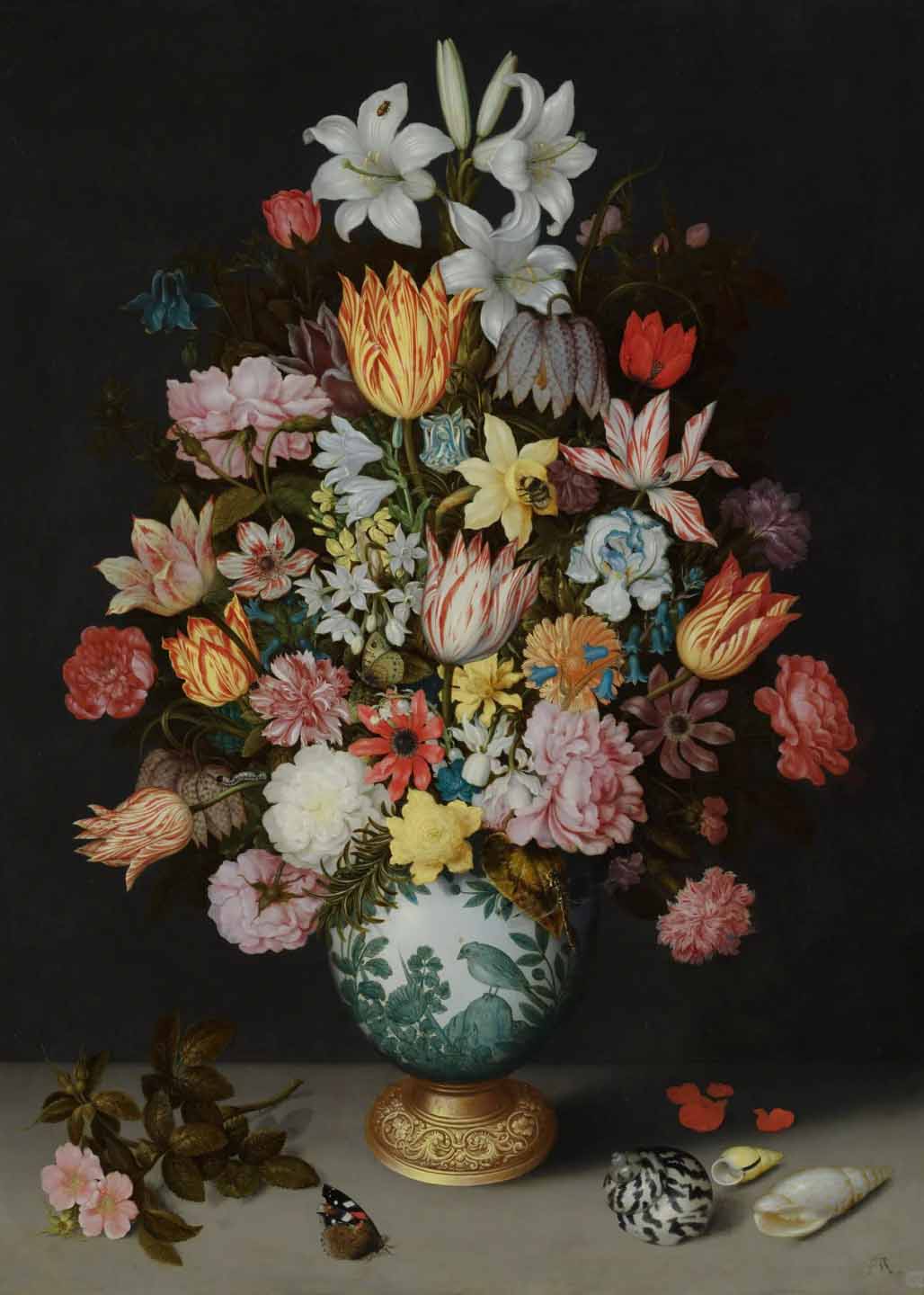
In the seventeenth century, artists such as Ambrosius Bosschaert the Elder refined oil art flowers into a field of precision and layered symbolism. Carefully arranged bouquets combined species that rarely bloomed together, demonstrating both technical mastery and conceptual construction.
These compositions reflected wealth generated by global trade, yet they also included subtle reminders of transience—slightly curling petals, insects, or fallen leaves. Rather than serving as simple decoration, these works framed prosperity within moral reflection.
Dutch still life elevated floral painting into a disciplined meditation on wealth, fragility, and time.
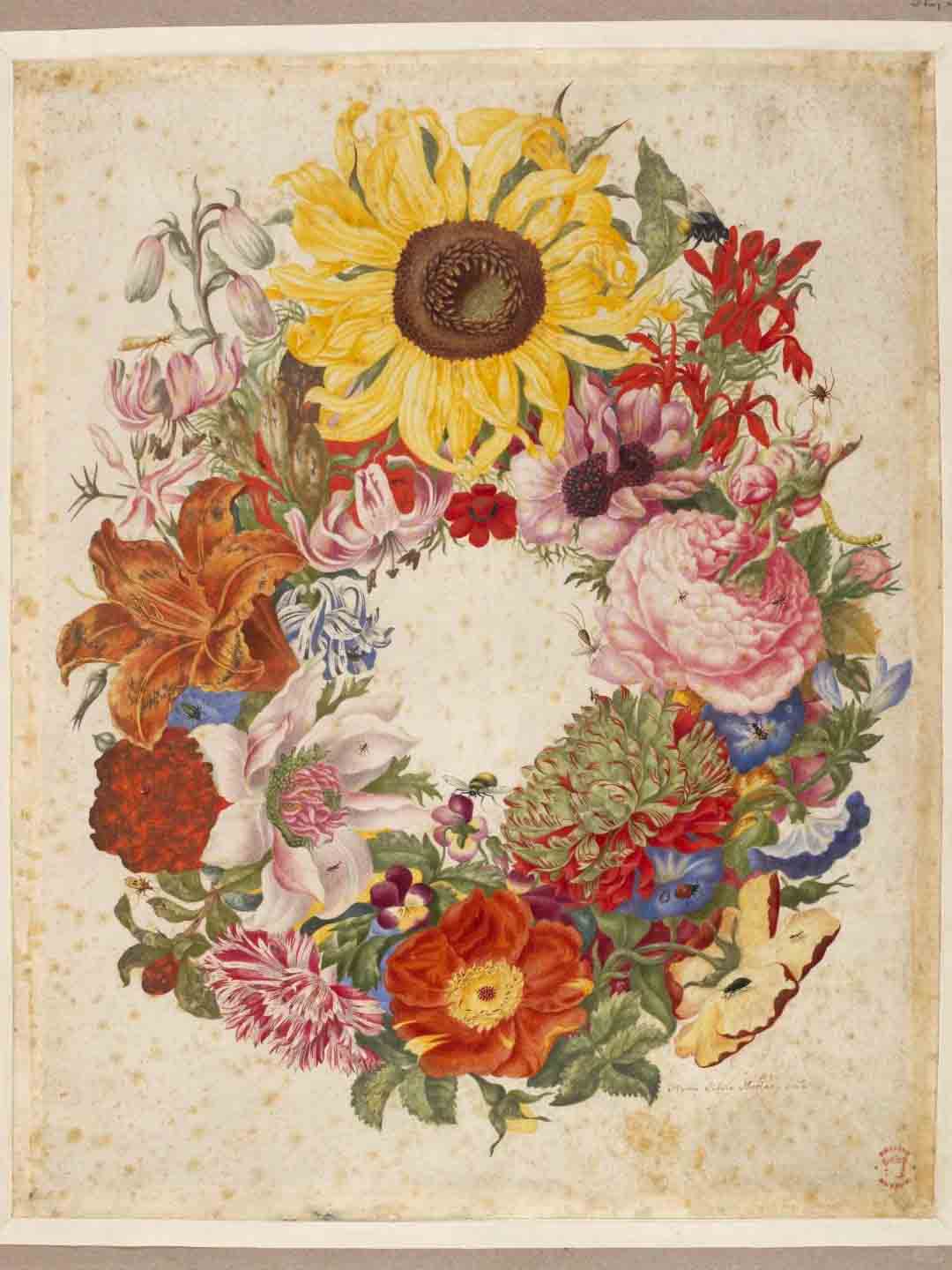
The naturalist Maria Sibylla Merian integrated artistic clarity with scientific observation. Her studies of plants and insects established a systematic visual language grounded in accuracy.
Botanical illustration differs from oil still life in purpose. It prioritizes structure, proportion, and legibility. Yet its compositional balance demonstrates that scientific documentation can also achieve aesthetic coherence.
Botanical studies reveal that floral art developed alongside scientific classification, not apart from it.
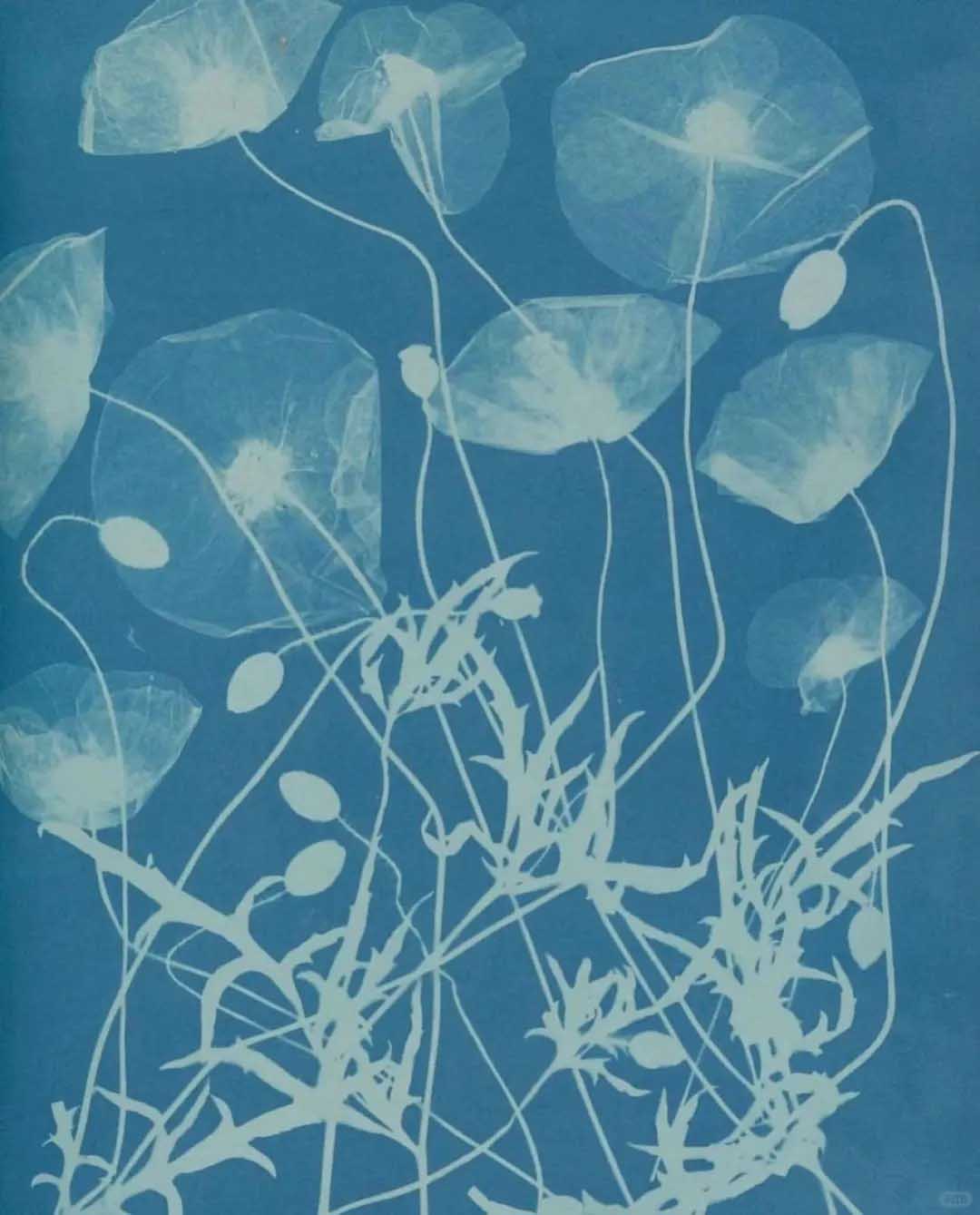
In the nineteenth century, Anna Atkins introduced cyanotype printing to botanical documentation. Her luminous blue impressions recorded plant forms through direct contact rather than painterly interpretation.
This technical shift altered perception. The plant itself left a trace on paper, reducing the artist’s hand while emphasizing material presence. The transition from oil art flowers to photographic imprint broadened the definition of representation.
Early photographic processes replaced illusionistic technique with direct physical registration of plant form.
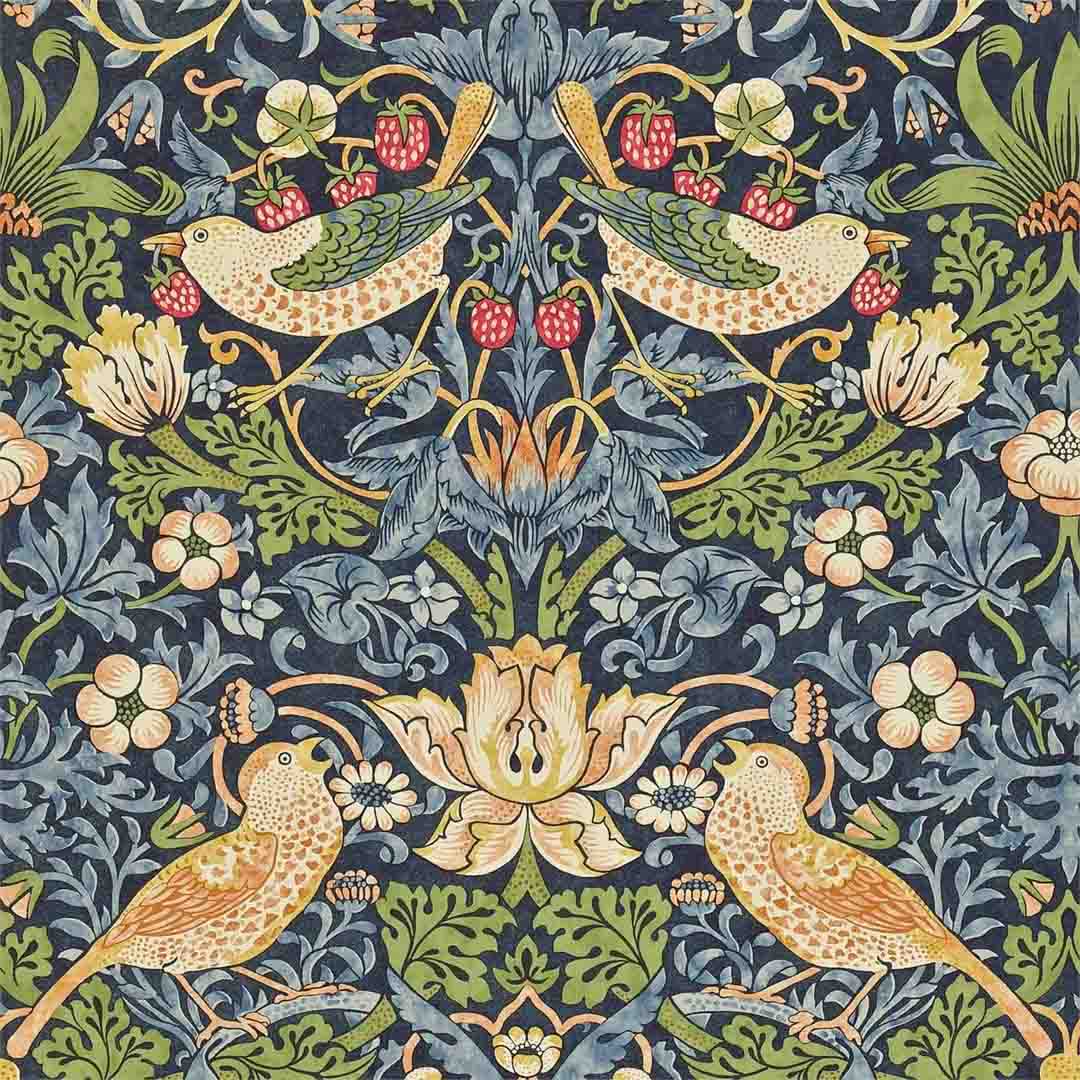
Designer William Morris transformed floral forms into immersive textile and wallpaper patterns. His design Strawberry Thief demonstrates rhythmic repetition, flattened perspective, and structured ornament.
Unlike framed paintings, decorative pattern surrounds the viewer. It organizes domestic space and integrates botanical rhythm into daily life. This dimension expands the understanding of how the floral motif functions beyond the gallery.
Floral design in decorative arts integrated aesthetic innovation into lived architectural environments.
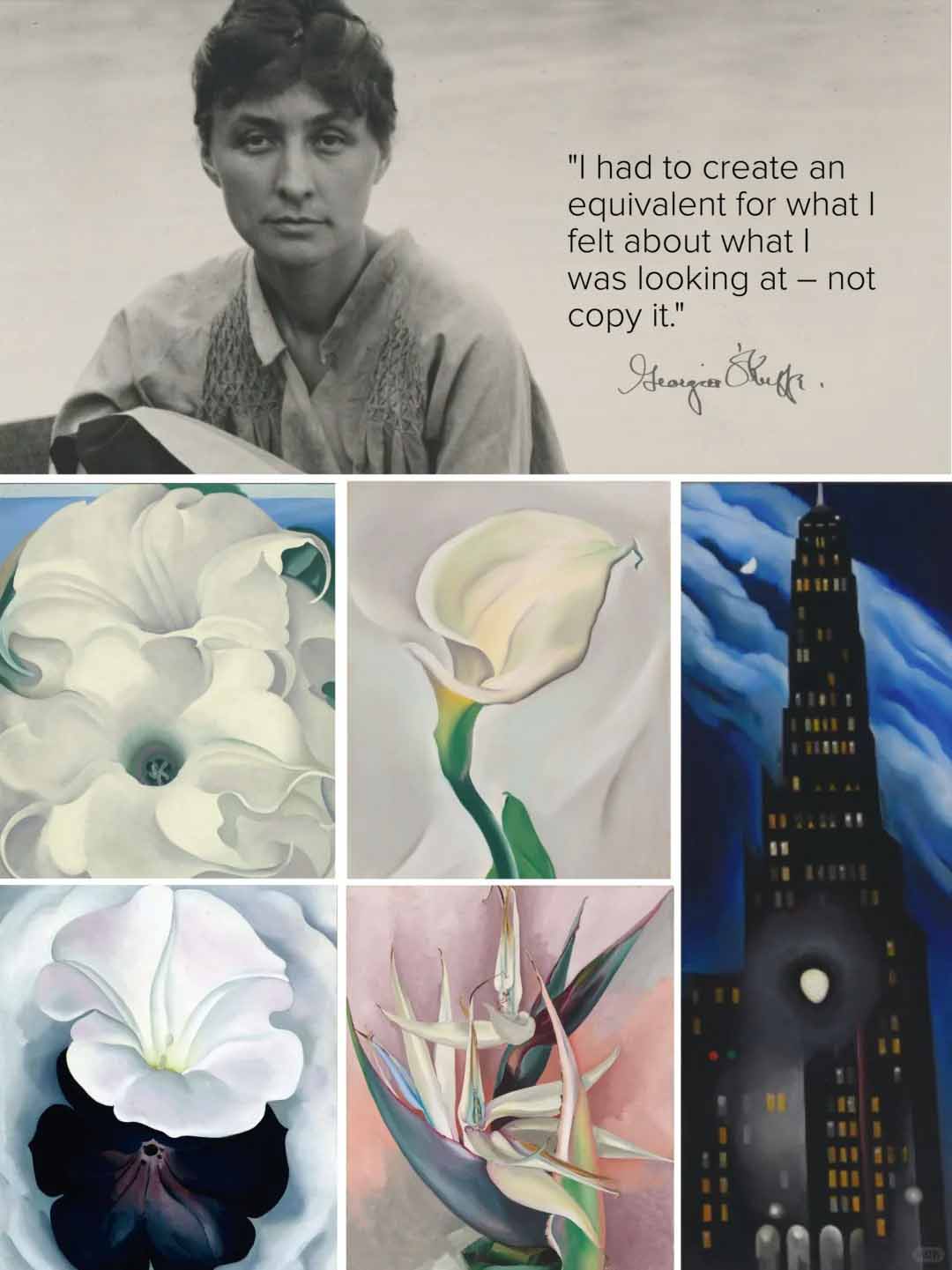
Modernist painters redirected attention from symbolism to perception. Georgia O’Keeffe magnified blossoms until petals filled the canvas, dissolving spatial context. Subtle tonal transitions emphasized curvature and internal structure.
These works approach the abstract of flowers without abandoning natural reference. The subject becomes a study of scale, edge, and color saturation rather than narrative meaning.
Modernist flower painting shifted focus from symbolic storytelling to formal and perceptual exploration.
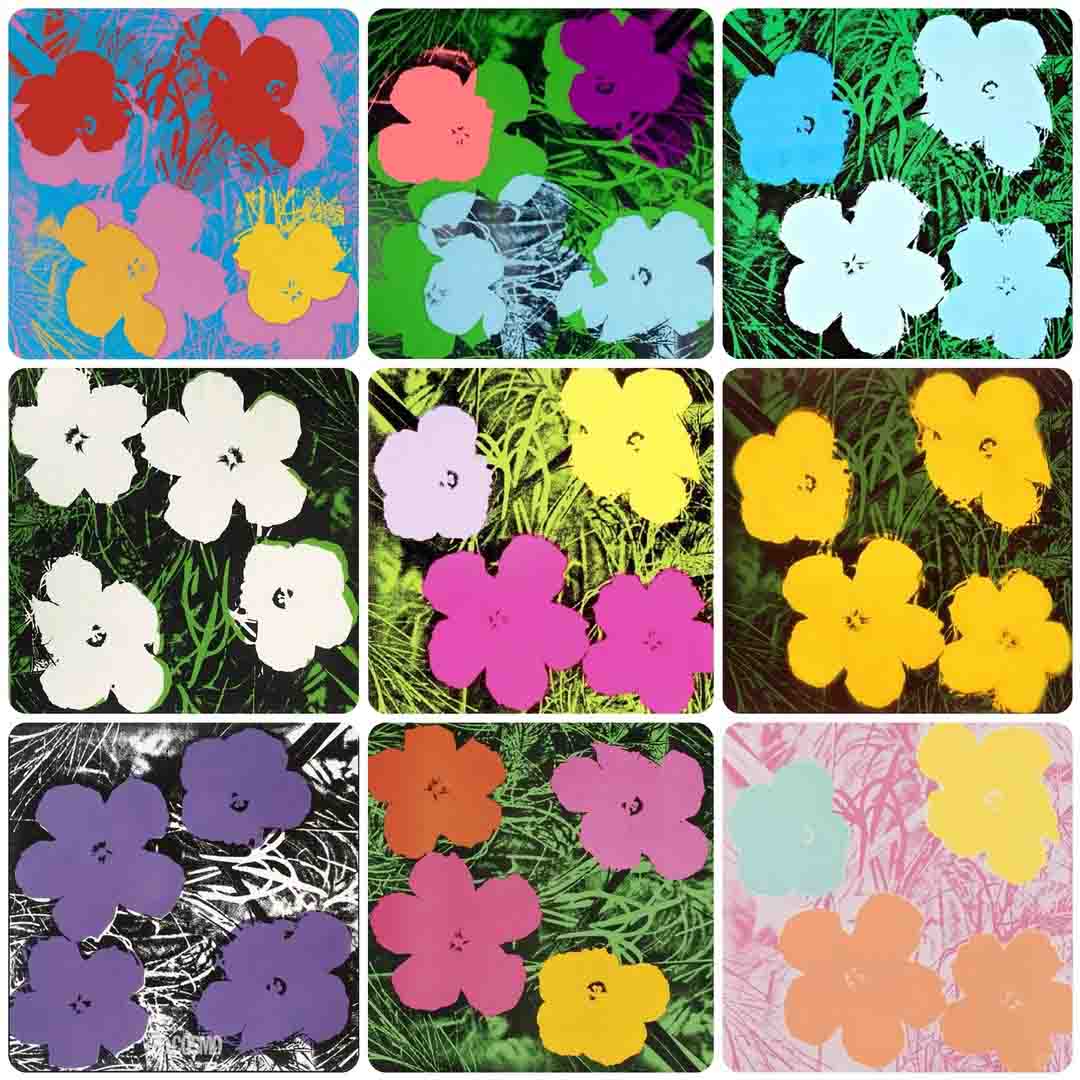
In the 1960s, Andy Warhol’s Flowers series introduced mechanical repetition and flat color contrasts. Bright silkscreen layers eliminated depth and replaced tactile oil surfaces with graphic immediacy.
The flower transformed into a reproducible icon aligned with consumer culture. This development marked a decisive movement away from handcrafted illusion toward industrial process.
Pop Art reframed the floral subject as a repeatable symbol embedded in mass production.
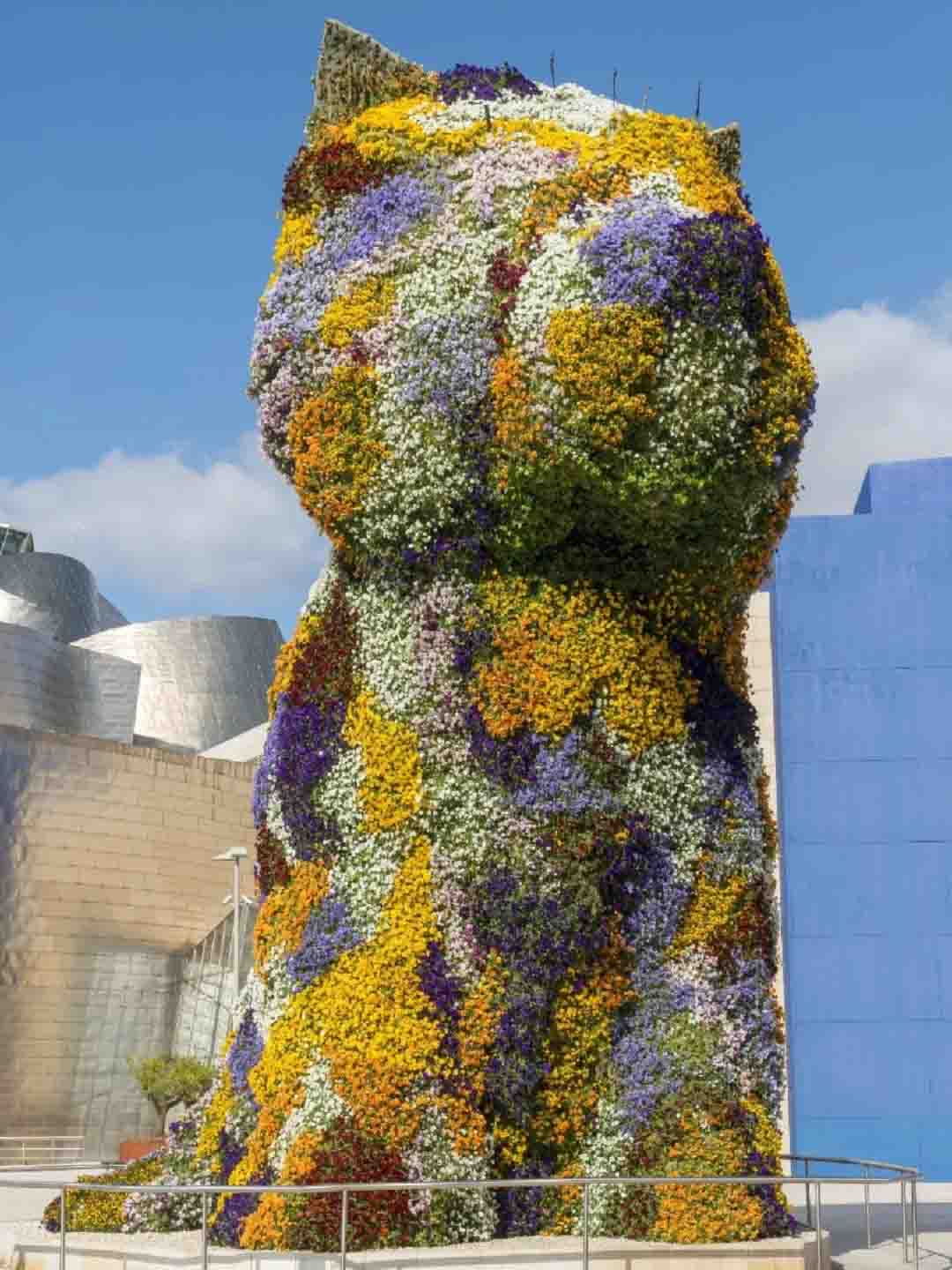
Contemporary practice extends floral representation across sculpture, branding, and installation. Jeff Koons’ monumental sculpture Puppy, composed of living flowers, merges horticulture with architectural scale. The work emphasizes spectacle, maintenance, and public visibility.
Current artists also integrate ecological themes, referencing biodiversity and environmental instability. The flower becomes both aesthetic form and environmental indicator.
Contemporary approaches expand the floral motif into spatial, ecological, and global frameworks.
Despite technological change, oil painting retains relevance. Contemporary painters combine glazing traditions with structural simplification, bridging classical technique and abstraction.
Layered pigment produces depth unattainable through mechanical reproduction. At the same time, compositions often reduce background detail, moving closer to the abstract of flowers while preserving tactile presence.
Current oil-based floral works demonstrate that traditional media remain adaptable within modern conceptual discourse.
A comprehensive understanding of paintings of flowers requires attention to trade history, scientific discovery, industrial technology, and globalization. Rather than viewing each period as isolated, it is more accurate to see gradual transitions in meaning and material.
The evolution from detailed oil renderings to abstraction and installation reveals continuity rather than rupture.
Floral art history is best understood as an ongoing transformation of material, scale, and conceptual focus.
From seventeenth-century still life to contemporary installation, the floral subject continues to adapt. It absorbs technological change while preserving structural elegance. Whether rendered through layered oil pigment or simplified into bold graphic form, it remains a site of formal experimentation and cultural reflection.
The continued reinvention of floral art confirms its structural resilience within global visual culture.
Hi, I’m Philo, a Chinese artist passionate about blending traditional Asian art with contemporary expressions. Through Artphiloso, my artist website, I share my journey and creations—from figurative painting and figure painting to floral oil painting and painting on landscape. You'll also find ideas for home decorating with paint and more.
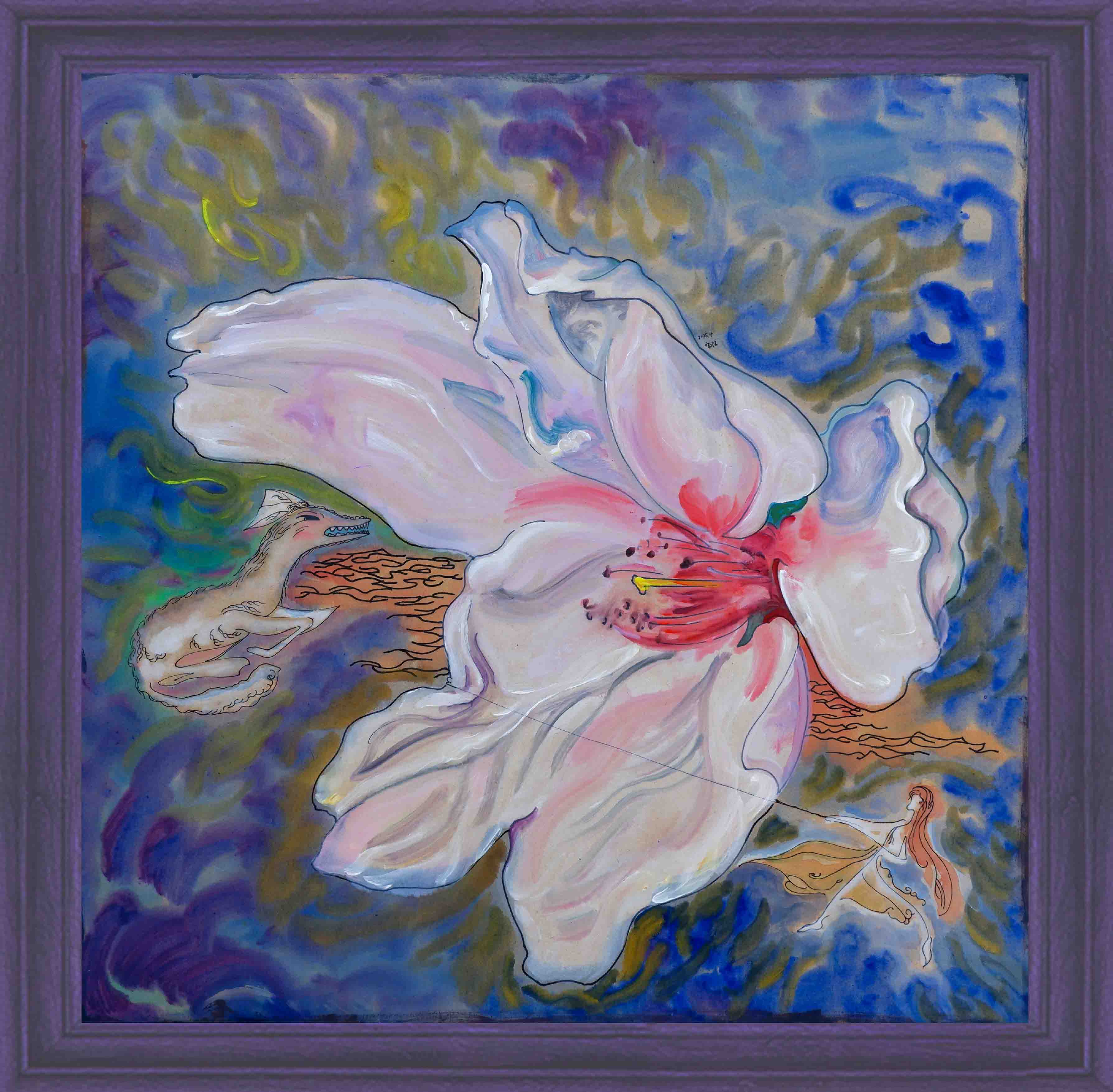
For readers seeking contemporary works aligned with this historical trajectory, artphiloso.com presents a focused body of oil and abstract compositions grounded in structural clarity and atmospheric restraint. The collection reflects disciplined surface treatment and refined compositional tension, echoing the long evolution from classical oil art flowers to modern abstraction. Rather than decorative excess, the works emphasize balance, spatial compression, and quiet intensity—qualities that sustain the enduring relevance of the floral subject within contemporary practice.
1. What makes flower subjects historically significant in art?
They combine visual clarity with symbolic flexibility, allowing artists to address themes of trade, science, mortality, and perception.
2. How did oil techniques influence early floral painting?
Oil pigment enabled fine gradation, surface luminosity, and detailed texture, establishing still life as a respected genre.
3. What defines the abstract of flowers?
It emphasizes structural form, scale, and color relationships while reducing narrative or symbolic context.
4. How did photography alter floral representation?
Photographic processes introduced direct imprint and mechanical reproduction, expanding representation beyond brushwork.
5. Why does floral art remain relevant today?
Contemporary artists use the motif to address ecology, materiality, and spatial installation, ensuring continued conceptual evolution.